As a beginner in Valorant, losing duels that look simple can be frustrating. That is exactly where good crosshair placement makes the difference. Remember that in this game, aim is the primary skill to master, with spells and abilities coming second.
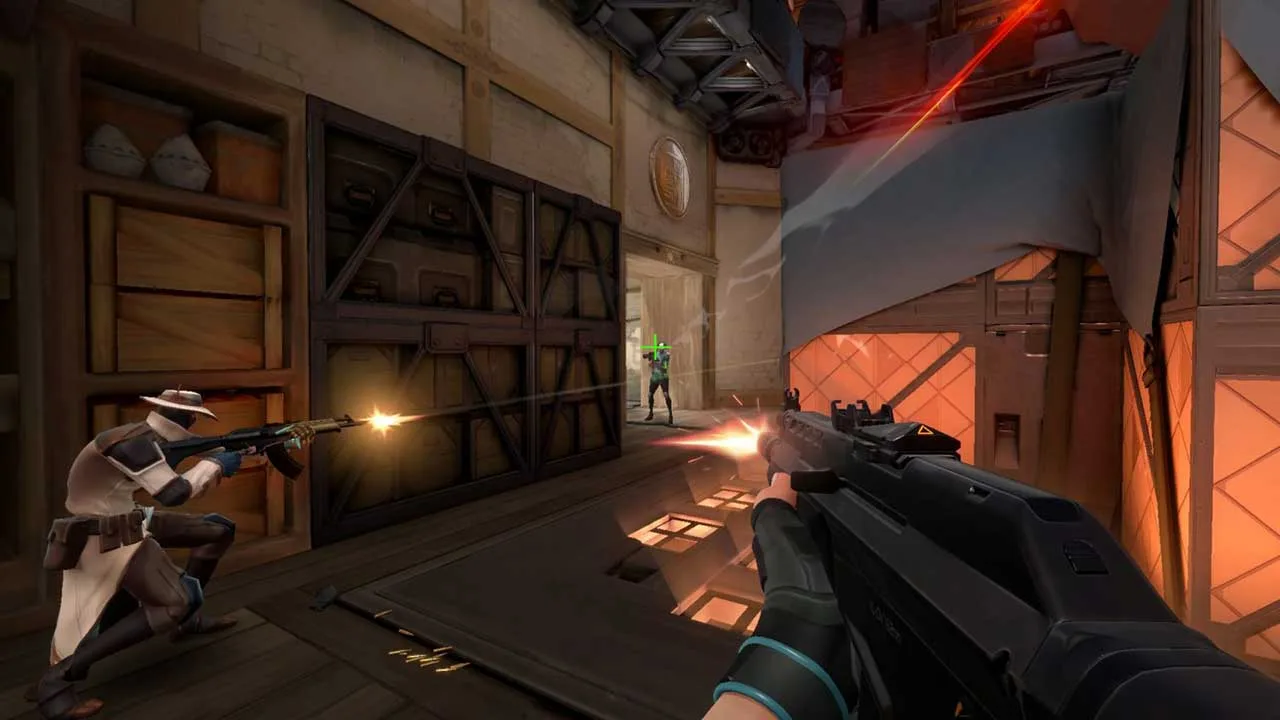
It is the ability to position the crosshair. Having good crosshair placement simply means putting the reticle in the right spot, so you need the fewest possible adjustments to land headshots.
HOW TO IMPROVE YOUR CROSSHAIR PLACEMENT?
Get your mouse sensitivity right
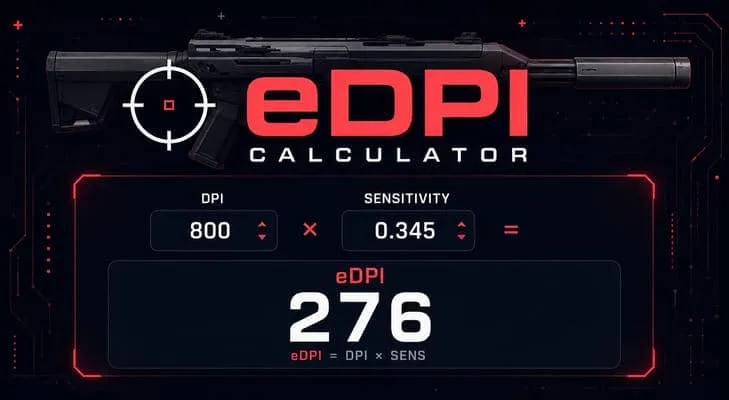
Every player has their own reflexes and plays in their own conditions (resolution, screen size…), so it is only natural that every player has their own mouse sensitivity settings in the game. We assume this point is already settled; otherwise, read this section first: How to find your sensitivity in Valorant.
Keep your crosshair at head height
When starting out, we tend to keep the reticle low (around the opponent's stomach), which can be fatal: you have to raise it, making it travel a longer distance before it reaches head level. That correction costs time your opponent will use to their advantage.
On a map, head height often matches a fixed element of the scenery: the top of a crate, a stripe on a wall, the edge of a window. Spot these elements and align on them instead of trying to estimate a height in thin air. Careful though: that height changes as soon as the ground rises or falls.
Adjust the reticle's position to your angle
When you hold a door, for instance, you can see what happens in front of you, but your reticle must sit at the edge of the door frame, not in the middle of your field of view.
The principle is simple: your reticle must be where the opponent will appear, meaning at the edge of the obstacle they have to come around, not at the center of the opening. A player stepping out of a door is visible at the frame well before they reach the middle of it.
Change the way you move and slice the pie
Good crosshair placement also comes from good agent positioning. The way you move, especially to clear angles, matters. Moving straight ahead exposes you (head and body) to enemy fire, while working the angle in an arc only exposes your shoulder and limits the damage.
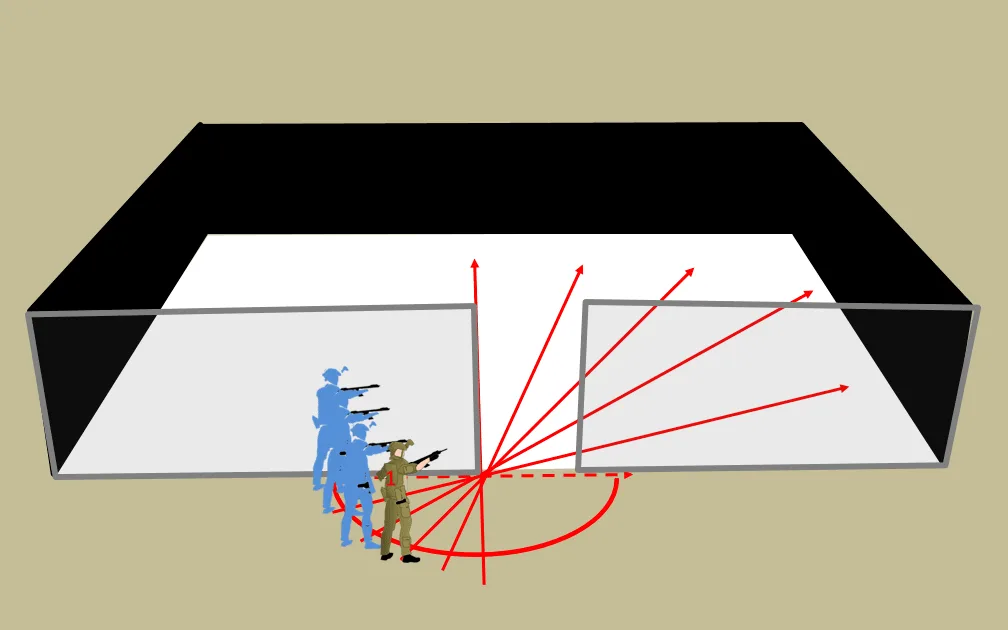
The mechanic makes you use only the left and right keys (A and D) while adjusting the crosshair's position with the mouse.
By clearing the angle slice by slice, you reveal one opponent at a time instead of exposing yourself to the whole area at once. You turn a one-versus-three duel into three successive one-versus-ones. It is the only technique that shifts the odds without improving your aim.
A READABLE CROSSHAIR MAKES PLACEMENT EASIER
There is a lot of talk about placement, rarely about the crosshair itself. Yet a badly set crosshair makes placement harder: too large, it hides the head it is aiming at; too hard to see, it disappears on certain backgrounds; dynamic, it can blur your reference point if you are not used to it. A thin, high-contrast and stable crosshair, on the other hand, lands where you look at first glance, with no extra effort.
The color, the outlines, the size and the type of crosshair that suit you then come down to your own preferences: that is exactly what our dedicated guide covers.
ROUTINES AND TRAINING TO IMPROVE YOUR CROSSHAIR POSITIONING
Now that the theory is covered, it is time to practice. As the saying goes: practice makes perfect.
Track your Valorant statistics
Seeing your own progress matters, and the best way to see it is through hard numbers rather than feelings. I strongly recommend using a Valorant tracker to follow your evolution and keep your motivation up.
The most telling indicator for this particular skill is your headshot percentage: it directly reflects the quality of your placement, far better than your kill ratio.
Practice on every map in custom games
You can launch solo custom games on the different maps, to build your habits without the stress of enemies rushing you and without time pressure. If you do not know how, see how to enable cheats mode in Valorant.
Everyone improves at their own pace, but you will clearly see progress if you give this drill 10 minutes a day. And of course, do it on every map.
Practice in Deathmatch
The mode can feel stressful, with 14 players on the map and no way to cover everything, but it remains a great exercise to apply the good habits and sharpen your crosshair placement.
Hold on, even when the road feels long
It is probably the best advice for building your aim in Valorant, because the mental side plays a big part:
THE COMMON PLACEMENT MISTAKES
Good placement is mostly built by removing bad habits. Here are the five that cost the most duels.
FREQUENTLY ASKED QUESTIONS
Is crosshair placement more important than raw aim?
Yes, by far, for a player starting out or stuck at their rank. A reticle already sitting at head height in the right spot turns a duel into a simple click, with no mouse movement. Conversely, the best aim in the world cannot save a reticle pointed at the floor when the opponent appears. It is also the fastest skill to improve, because it is a habit rather than dexterity.
Which reticle should you use for good placement?
First of all, a crosshair that you can see immediately on any background, without hiding the enemy's head. The precise settings (color, outlines, size, static or dynamic) then depend on your preferences: follow our guide to finding your ideal crosshair to make that choice.
How long does it take to anchor good placement?
A few days to see the first effects, several weeks for it to become automatic. It is a habit, not a physical ability: your progress depends on consistency, not volume. Ten minutes a day in a custom game is enough, provided you truly focus on reticle height instead of wandering around the map.
Should you slice the pie all the time?
No. The technique is meant for opening an unknown angle when you have time, typically at the start of a round or during a careful retake. On a fast execute where your team enters behind flashes, slicing the angle puts you behind your teammates and makes you enter alone. The right reflex is knowing when to switch based on the round's tempo.
Which map should you practice on first?
The one you play the most, and one site at a time. Placement depends on the precise geometry of the place, so what you learn only partially transfers from one map to another. Pick a site, list the entry angles, and work on reticle height for each of them before moving to the next.