The fortress out of China
See the agent page →Agent figurines, engraved LED crystals, keycaps and apparel. The part of your setup that will never win a duel.
Browse the shop →
From the discovery of Radianite to the conflict between the two Earths, the complete timeline of the VALORANT Protocol.
Follow the timeline →

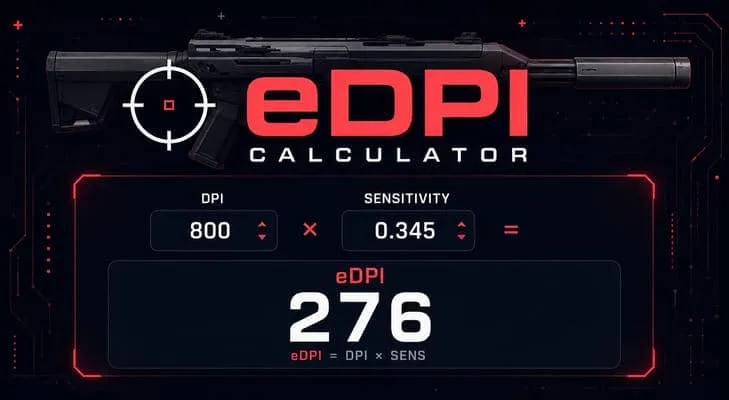
Type your DPI and your in-game sensitivity: your eDPI, the distance for a full 360° and the mousepad width you need show up straight away.
Try the calculator →Masters of aggression and space creation. Eight agents built to go in first, break the enemy line and land the frag that swings the round.
In the tactical world of Valorant, every agent fills a precise function inside the team. Among the four big role categories (Controllers, Sentinels, Initiators and Duelists), it is the last of these that embodies the most aggressive side of the game. Valorant Duelists are frontline fighters in the purest sense: fraggers built to lead the charge, to be the first to engage the enemy and to land the decisive kills that open the way for their team.
Valorant rests on team strategy, but Duelists bring one essential component: the ability to break enemy lines and create an immediate numbers advantage. With a self-sufficient, offensive playstyle, these aggressive agents are usually the first onto a site on attack, and the first to counter-attack on defense. Their presence in a composition is rarely questioned, because they are the spearhead of any site take.
The main job of a Duelist in Valorant is space creation. In practice, that means the Duelist is the one who crosses the dangerous chokepoints, forces the enemy to react and frees up ground so the rest of the team can move up. Where a Controller drops smokes to hide the angles, the Duelist is the one who goes through those smokes to take the duel.
Second, Duelists are responsible for getting the first kill of the round. That opening kill immediately puts the team up a body (5 against 4), which raises their odds of winning the round considerably. The abilities of these fraggers are designed specifically to make those engagements easier: flashes to blind, dashes to reposition, extra mobility to throw the enemy off.
The mechanic that defines the role. One thing that sets Duelists apart is that some of their abilities recharge on kills. That is the case for Reyna's signature, Jett's dash and Waylay's Refract. The mechanic rewards aggressive play and pushes the Duelist to stay in the middle of the action.
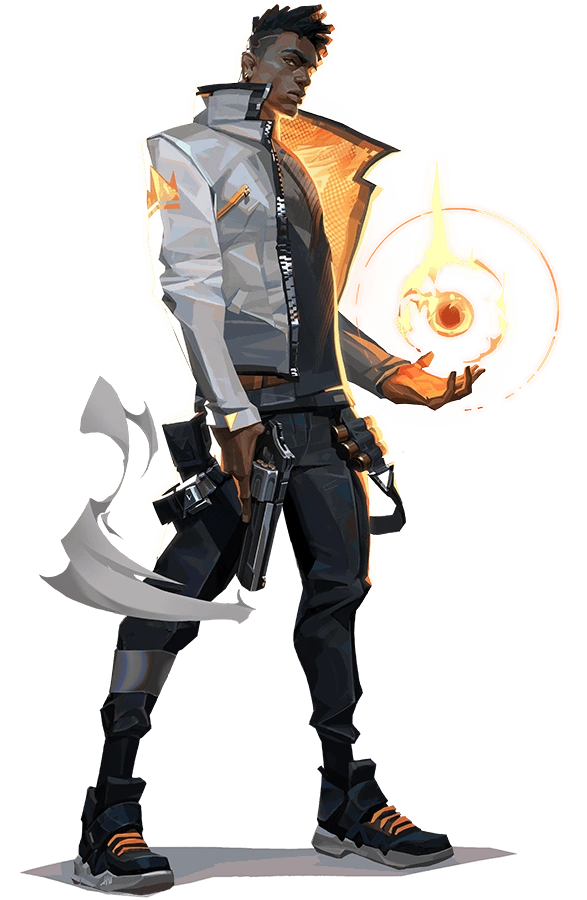
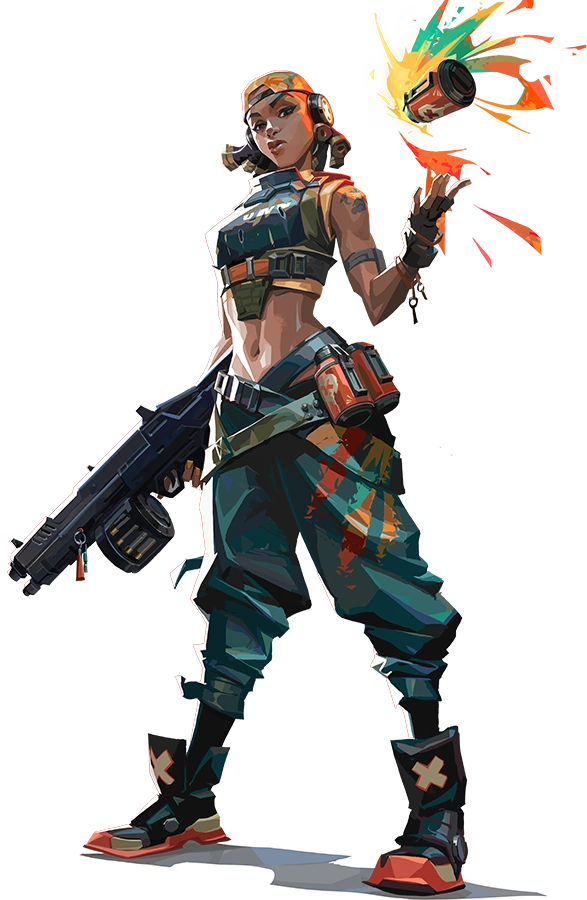
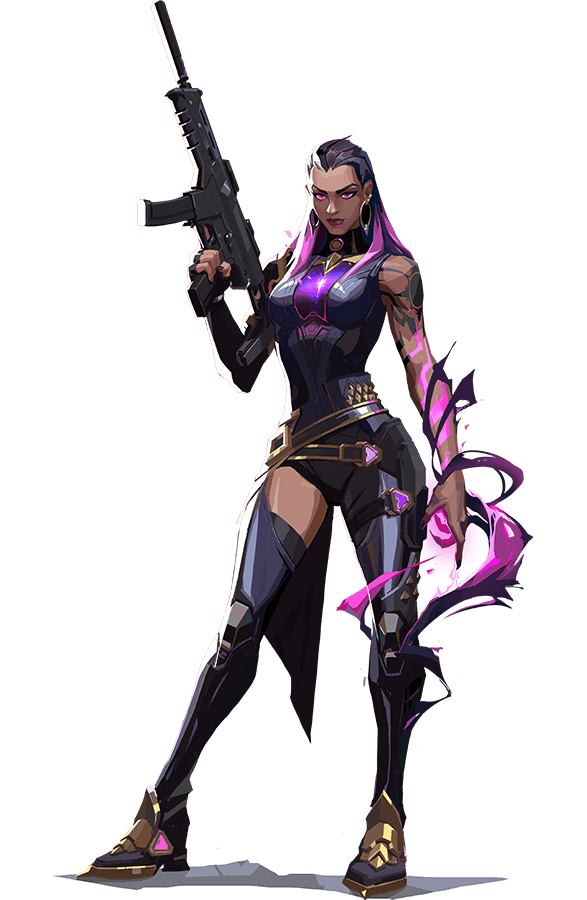
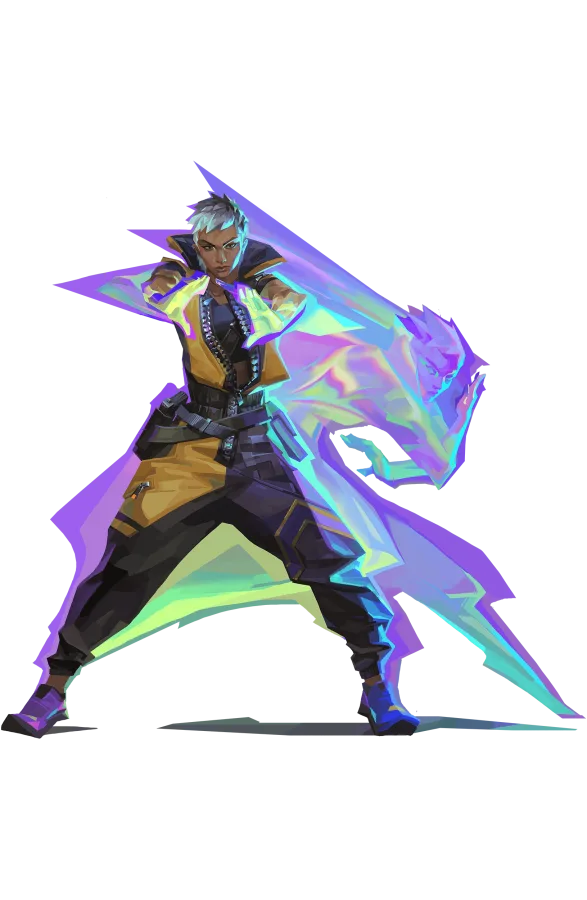
Valorant currently counts eight Duelists on its roster. Here is a look at each of them, from the most mobile to the most methodical.
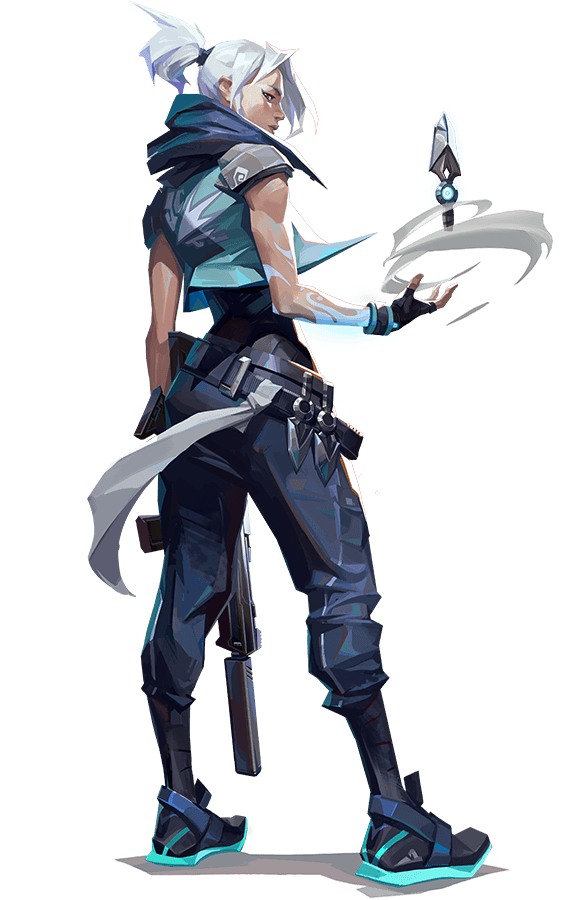
During a site execute, the Duelist is the first to cross the chokepoint, to use abilities to neutralize the defenders and to get a foothold on the plant site. A Jett can dash through an allied smoke to catch a defender off guard, while a Raze throws her Boom Bot to force a reposition before she even engages.
Duelists set the tempo of the game. When a Duelist gets the first kill, the round tilts: the team is up a body, the defenders have to reorganize, and teammates move up with less risk. That is what people call the open frag: breaking the round open by taking out the first opponent. A consistent entry fragger gives their team a considerable strategic advantage.
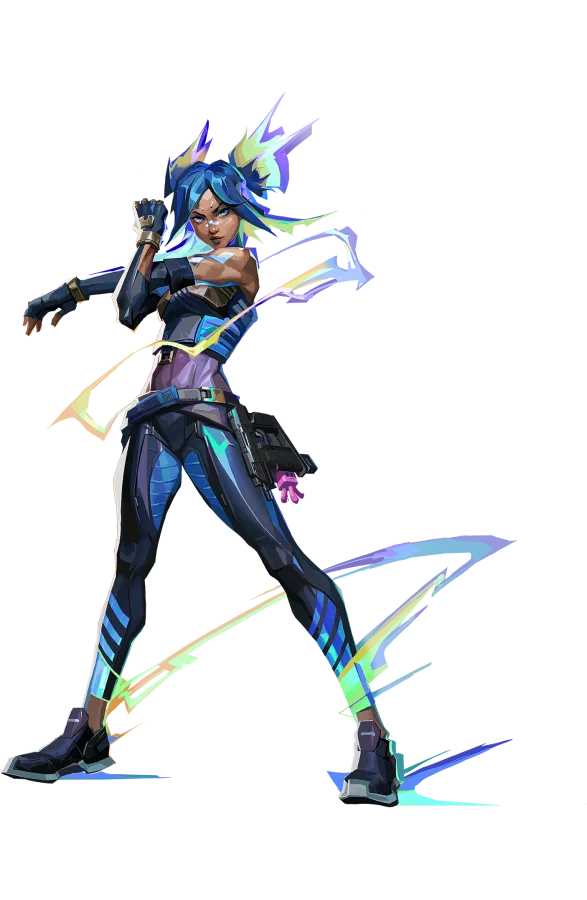
Duelists are often associated with attack, but their role on defense is far from negligible. A Duelist can hold an aggressive angle for an early pick, then fall back thanks to their mobility. Jett snipes from an exposed position and dashes to safety once she has hit her target. Neon flanks quickly to throw off an enemy push. The Duelist brings an unpredictable dimension to defense and forces the attack to stay alert.
Master the timing of your engagements. A good Duelist does not charge in blind. They wait for their team's utility to be in place, smokes down, flashes ready, then go in as part of a coordinated push. Going in too early without support and going in too late are the two common mistakes to avoid.
Use your abilities to surprise. The best entries combine abilities with unpredictable angles. An unexpected dash from Jett, a Raze double satchel coming in from above, or a Yoru teleport behind the enemy cut their reaction time down dramatically.
Communicate with your team. Duelists are self-sufficient agents, but communication still matters. Call your entries, ask for support smokes, and share the information you gather. An isolated Duelist is an ineffective Duelist. The Duelist and Initiator pairing is particularly strong when it is well coordinated.
Avoid the classic mistakes: going in alone with no utility, burning every ability at once with no way out, chasing frags instead of the objective, or forgetting to play for the team. A Duelist has to create space for their teammates, not just pile up kills.
The choice of a Duelist depends on your playstyle, on the map and on your team composition. Here are a few pointers to get you started.
| Your playstyle | Recommended agents |
|---|---|
| 🚀 You like speed and verticality | Jett Neon Waylay |
| 🎯 You prefer self-sufficiency and clutching | Reyna Phoenix |
| 🎭 You bet on creativity and mind games | Yoru |
| 💥 You want offensive area control | Raze |
| 🛡️ You are after methodical aggression | Iso |
At the competitive level, the best players master several Duelists and switch depending on the situation. If you are starting out, begin with a versatile agent like Phoenix or Reyna, whose kits are intuitive and will forgive positioning mistakes more readily.
Duelists are the offensive engine of any Valorant team. Without them there is no space creation, no consistent opening kills, no pressure capable of unsettling an organized defense. Whether it is Jett's aerial mobility, Raze's raw power, Neon's lightning speed or Waylay's disorienting light, every Duelist brings their own way of tipping the balance in their team's favor.
With eight agents available in 2026, the role offers considerable variety, from the pure duel (Reyna) to deception (Yoru), by way of controlled assault (Iso) and luminous chaos (Waylay). Fitting one or two Duelists into a balanced composition, alongside a Controller, an Initiator and a Sentinel, remains the golden rule of competitive strategy. In the end, aggression in service of the team is infinitely more powerful than aggression on your own.
The Duelist is the biggest role in Valorant and the one most often picked in solo queue. Here are the questions that come up most from players discovering the role, or hesitating between several agents.
The roster currently counts eight Duelists: Jett, Phoenix, Reyna, Raze, Yoru, Neon, Iso and Waylay. It is the biggest role in the game, which comes down to the variety of approaches possible within a single function: where Reyna bets on the pure duel, Raze controls an area with explosives and Yoru wins through deception.
Phoenix and Reyna are the two most forgiving picks. Their kits are intuitive, require no lineup to memorize, and above all they forgive positioning mistakes thanks to their healing or their escape. Jett, Neon and Yoru, on the other hand, punish bad movement decisions severely and need solid accuracy already in place to pay off.
It is a design choice specific to the role. Reyna's signature, Jett's dash and Waylay's Refract come back after kills, which rewards aggressive play directly and pushes the Duelist to stay in the middle of the action rather than hoarding utility. A Duelist stringing frags together therefore has far more resources than a passive player.
The golden rule is still one or two Duelists alongside a Controller, an Initiator and a Sentinel. Two Duelists work well on maps offering several simultaneous entry points, but beyond that the team loses the vision control and the information those entries need to land. Aggression in service of the team stays more effective than aggression on your own.
Author: Yassine